A kitchen countertop can look perfect in a showroom and still be the wrong choice for the way your household lives. When comparing stone benchtops vs laminate surfaces, the better option comes down to more than color or price. It depends on how often you cook, how hard your kitchen works, the age and style of your home, and where you want to invest your renovation budget.
For homeowners planning a kitchen renovation, both materials can deliver a clean, modern result. Stone offers a premium feel and long-term durability, while laminate provides flexibility, value, and an increasingly convincing range of finishes. The right decision is the one that supports your daily routine without creating unnecessary maintenance, cost, or compromise.
Stone Benchtops vs Laminate Surfaces: The Main Difference
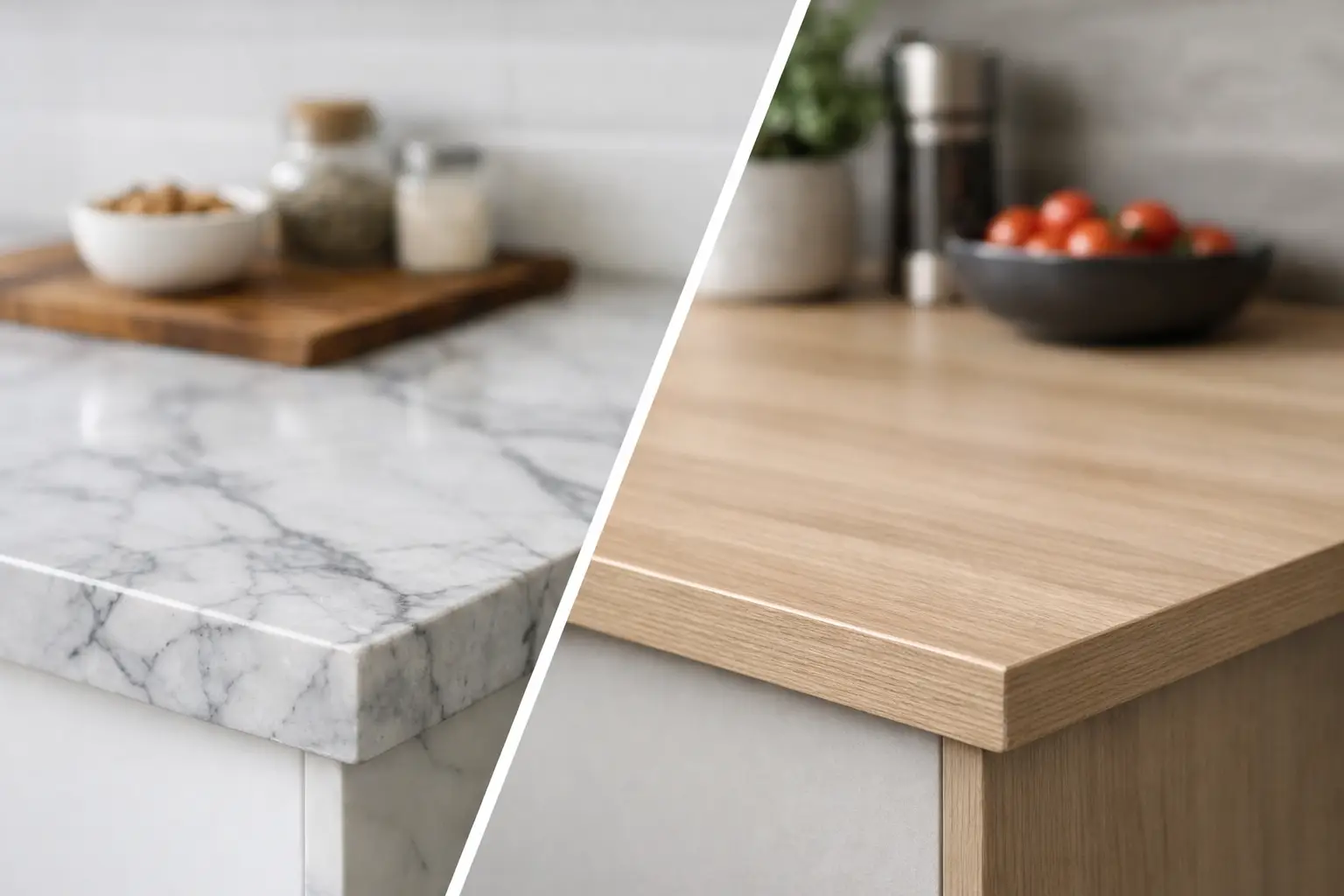
Stone benchtops are made from natural stone, engineered stone, porcelain, or sintered materials, depending on the product selected. They are typically thicker, heavier, and installed by specialist fabricators. Their appeal is immediate: a solid stone surface adds visual weight, refined texture, and a sense of permanence to a kitchen.
Laminate surfaces are manufactured from layers of decorative paper and resin bonded to a board substrate. Modern laminate is a long way from the glossy patterned counters found in older kitchens. Today’s ranges include realistic stone looks, warm timber tones, concrete-style finishes, soft matte colors, and slim contemporary profiles.
Neither material is automatically superior. Stone usually performs better where heat, impact resistance, and a premium finish are top priorities. Laminate often makes more sense where budget control, easy replacement, or a lower-risk refresh is the goal.
Cost: Upfront Price Is Only Part of the Decision
Laminate is generally the more affordable choice, both for materials and installation. It can allow homeowners to allocate more of the renovation budget to quality cabinetry, better appliances, lighting, storage hardware, or a functional layout change. Those upgrades often have a greater effect on how a kitchen works every day than an expensive surface alone.
Stone has a higher upfront cost because the material requires measuring, fabrication, transport, and professional installation. Details such as waterfall ends, integrated drain grooves, cutouts, thicker edges, and unusually shaped kitchens can increase the final price further.
That said, value should not be judged only by the initial quote. A well-selected stone benchtop can remain attractive for many years and may appeal to future buyers in a well-finished home. Laminate may be the smarter financial choice for a rental property, a modest kitchen upgrade, or a renovation where the home’s value and surrounding market do not support a high-end specification.
The most practical approach is to set the budget after confirming the kitchen layout and cabinetry plan. Choosing a benchtop before understanding the full scope can lead to difficult cuts later in the project.
Durability in a Busy Kitchen
Stone is widely chosen for its hardwearing surface. Engineered stone alternatives, porcelain, and sintered stone can all offer strong resistance to everyday scratches, staining, and wear, although performance varies by product. Natural stone can be beautiful and durable, but some varieties are more porous and may need sealing and more careful upkeep.
Heat is an area where stone often has an advantage, but it is not indestructible. Sudden temperature changes can damage some engineered surfaces, and placing very hot cookware directly on any countertop is not a habit worth relying on. Trivets remain a sensible part of kitchen use.
Laminate handles normal family life well, including food preparation, spills, and routine cleaning. However, it is more vulnerable to heat, deep cuts, and moisture damage if the surface or joins are compromised. A hot pot can mark laminate, and water that reaches an exposed edge can cause the substrate beneath to swell.
For a household where cooking is frequent, children do homework at the island, and the kitchen is used from morning through evening, stone can provide added peace of mind. For lighter-use kitchens or homeowners who are careful with hot cookware and chopping boards, laminate can remain in excellent condition for years.
The weak points matter as much as the surface
A countertop rarely fails in the center. Problems usually start at joins, sink cutouts, edges, and areas exposed to standing water. Good installation is critical for both materials.
With stone, accurate measurements, secure support, and correctly finished cutouts protect the surface from cracking or movement. With laminate, careful sealing around the sink and splashback is essential. This is why workmanship should carry equal weight with material selection. A lower-cost surface installed precisely will often outperform a premium surface fitted poorly.
Style, Color, and the Overall Kitchen Design
Stone creates a strong focal point. Veined patterns, subtle textures, and solid neutral shades can make an island feel like a furniture piece rather than simply a work surface. It works especially well in kitchens with custom cabinetry, open-plan living areas, and designs where the benchtop continues up the wall as a full-height backsplash.
Laminate gives homeowners more freedom to create a particular look without tying the entire budget to one material. A soft white or pale timber laminate can brighten a compact kitchen. A dark matte finish can create contrast against light cabinetry. Stone-look laminate can also bring visual movement to the room at a much lower price point.
The key is to view samples against your cabinet doors, flooring, wall paint, and lighting. A color that looks warm under showroom lights may look cooler at home. Pattern scale matters too. Large, dramatic veining can suit a wide island but may feel busy in a smaller galley kitchen.
Edge details also change the final result. Stone can be built up for a thicker profile or shaped with refined edge treatments. Laminate generally has more limitations, although modern square-edge and ABS edge options can look crisp and contemporary when properly finished.
Maintenance and Day-to-Day Cleaning
Laminate is simple to maintain. A soft cloth, warm water, and mild cleaner are usually all that is needed. Avoid harsh abrasives, strong chemicals, and aggressive scrubbing, particularly on matte finishes. Wipe up spills promptly around joins and sink areas.
Stone maintenance depends on the specific product. Many engineered and sintered surfaces need little more than regular cleaning with a non-abrasive cleaner. Natural stone may require periodic sealing and quicker attention to spills from acidic foods, wine, oils, or strongly colored ingredients.
For homeowners who want the least complicated care routine, laminate and low-maintenance engineered stone alternatives are both practical options. If you love the character of natural marble or another porous natural stone, it is worth accepting that small marks and changes over time may become part of its appearance.
Which Surface Fits Your Home?
Stone is often the right fit when the kitchen is a long-term investment, the home has a premium finish level, and the household wants a durable surface with a substantial look and feel. It can be particularly worthwhile for a large island that will become the center of cooking, entertaining, and family life.
Laminate is a strong choice when you want a well-designed kitchen without stretching the budget. It suits first-time renovators, investment properties, secondary kitchens, compact layouts, and projects where cabinet quality and layout improvements need to take priority. It is also a sensible option when you may update the kitchen again within the next decade.
There is room for a mixed approach as well. Some homeowners choose stone for a central island and laminate for perimeter work areas, depending on the design and budget. Others use laminate in a laundry, pantry, or study nook while reserving stone for the main kitchen. A tailored material plan can deliver a more balanced result than applying one finish everywhere.
Plan the Surface Around the Way You Live
Before selecting samples, think through the moments your kitchen needs to handle. Consider where groceries land, whether children sit at the island, how much food preparation happens each week, and whether the room is mainly a practical workspace or a place for entertaining. These details help determine whether the extra investment in stone will be felt every day or whether laminate will give you the look and performance you need.
At DY Construction Group, we help homeowners make those choices in the context of the complete renovation, not as an isolated showroom decision. The best benchtop is one that suits the cabinetry, layout, budget, and future plans for your home – then is installed with the precision needed to keep looking good long after handover.