

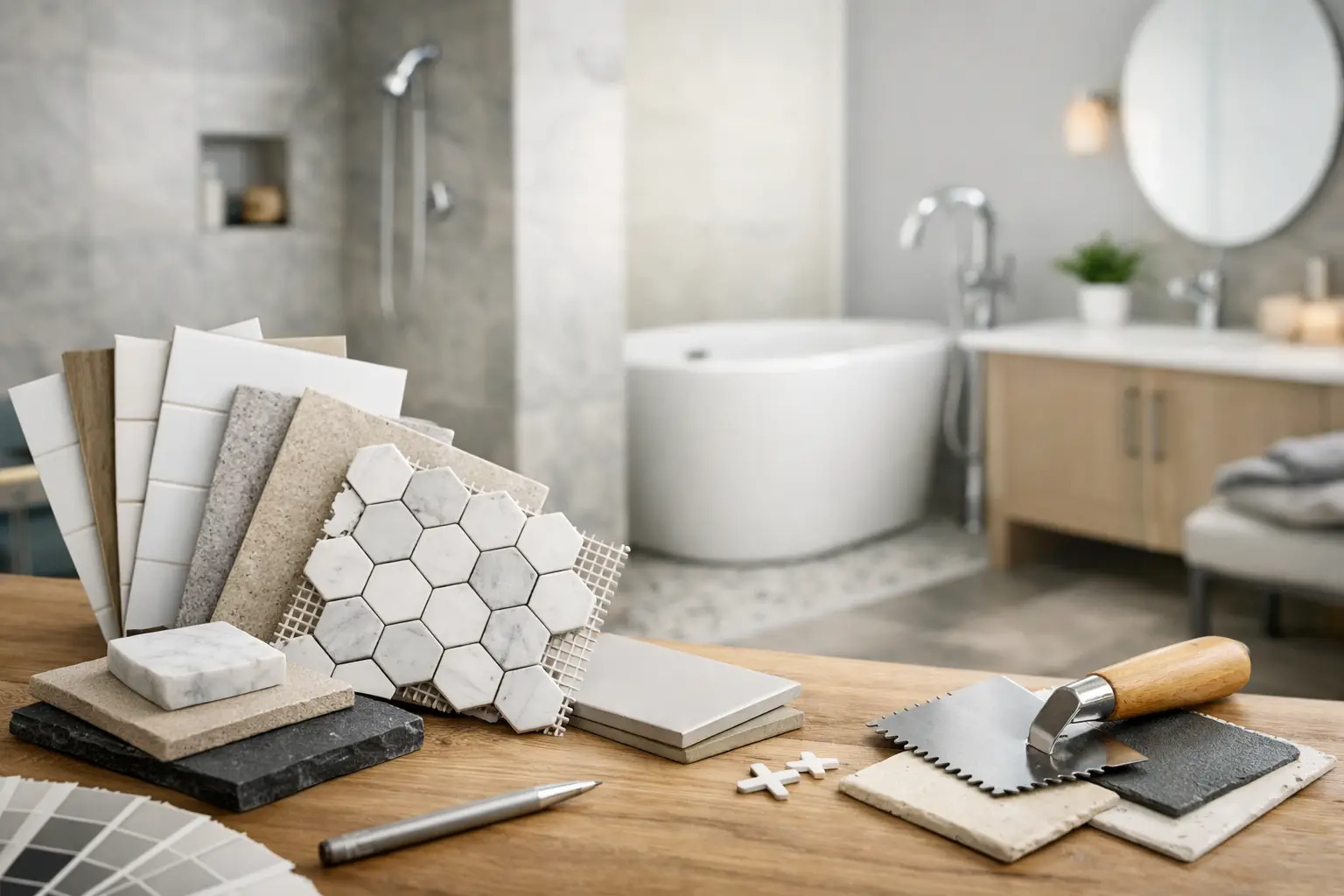
A bathroom can look finished on paper and still disappoint once it is in daily use. The floor may feel too slippery after a shower, grout may stain faster than expected, or a feature wall may overwhelm a compact room. This bathroom tile options review looks beyond showroom appeal to help homeowners choose finishes that suit real routines, budgets, and long-term maintenance.
Tile affects more than the color palette. It influences how easy the room is to clean, how light moves through the space, how safe the floor feels underfoot, and how well the renovation holds up over time. The right choice comes from balancing appearance with practical performance, not simply selecting the tile that looks best in a display.
Bathroom Tile Options Review: Start With How You Use the Room
Before comparing materials, consider the bathroom itself. A busy family bathroom needs durable, forgiving surfaces that cope with frequent showers, wet feet, and regular cleaning. A guest powder room has less water exposure, which can make a more decorative or delicate finish a sensible option. An ensuite can be an opportunity to create a more tailored, spa-like feel, provided the materials remain practical.
The location of the tile matters just as much as its material. Shower floors need strong slip resistance and usually benefit from smaller formats because the additional grout lines add traction. Main bathroom floors need a surface that is comfortable, durable, and easy to maintain. Wall tiles can prioritize visual impact because they do not receive the same wear as floors.
It also pays to view samples in the actual room. Bathroom lighting changes throughout the day, and a tile that appears warm under showroom lights may look gray or flat at home. Place samples near existing cabinetry, fixtures, and paint colors before committing.
Porcelain Tile: The Reliable All-Rounder
Porcelain is often the strongest all-purpose choice for bathroom renovations. It is dense, low-porosity, and highly resistant to water, stains, and everyday wear. For households that want a polished result without high maintenance demands, porcelain is difficult to overlook.
Modern porcelain is available in an extensive range of finishes, including stone looks, concrete looks, terrazzo styles, and timber-look planks. This allows homeowners to achieve a premium design direction without taking on the care requirements of natural stone or real timber in a wet area.
There are trade-offs. Large-format porcelain can make a bathroom feel more open because it creates fewer grout lines, but it requires a very flat substrate and precise installation. Poor preparation can lead to uneven edges, drainage issues, or a finish that looks less refined than intended. Matte or textured porcelain is generally a safer option for floors than a polished surface, particularly in homes with children or older family members.
Ceramic Tile: A Practical Choice for Walls
Ceramic tile remains a cost-effective and attractive choice, especially for bathroom walls, backsplashes, and feature areas. It is generally easier to cut than porcelain, comes in a broad selection of colors and shapes, and works well for classic subway tiles, handmade-look finishes, and decorative patterns.
For wall applications, ceramic offers excellent value. It is easy to clean, water-resistant when properly installed, and can create a fresh, timeless backdrop without consuming too much of the budget. Choosing a simple ceramic wall tile can also leave more room in the budget for quality waterproofing, fixtures, storage, or a more durable floor tile.
Ceramic is not always the best option for heavy-use flooring. It is typically less dense than porcelain and may be more prone to chipping in high-traffic areas. If you love a ceramic design for the floor, check that it is rated for that application and suitable for wet areas before making a final decision.
Natural Stone: Character With More Commitment
Natural stone brings variation that manufactured tile cannot fully replicate. Marble, travertine, limestone, and slate each have distinctive movement, texture, and color shifts. In the right setting, stone can give a bathroom a calm, high-end character that feels connected to the rest of the home.
The trade-off is maintenance. Most natural stone needs sealing, and some varieties are more vulnerable to etching, staining, or moisture-related issues than porcelain. Marble, for example, can be beautiful on walls or in a low-use powder room, but it may not suit every busy family bathroom. Honed finishes are often more practical than polished finishes because they disguise water spots and offer better grip.
Stone also needs careful selection and installation. Natural variation means samples will not show every change in tone or veining. This is part of the appeal, but homeowners should be comfortable with a finish that is naturally less uniform. A professional installer can plan the layout to distribute variation thoughtfully and avoid an accidental patchwork effect.
Mosaic Tile: Best Where Grip and Detail Matter
Mosaics are small tiles supplied in sheets, often made from porcelain, ceramic, glass, or natural stone. They are particularly useful for shower floors, niches, curved surfaces, and feature bands. Because they have more grout joints, mosaics can offer better traction in wet locations than a large smooth tile.
Their flexibility is a major advantage on shower floors where the surface must slope toward the drain. Smaller tiles follow the slope more easily, helping the floor drain correctly without awkward cuts or uneven sections.
The downside is grout. More joints mean more cleaning, especially with pale grout in a high-use shower. This does not mean mosaics should be avoided. It means grout color, grout quality, and cleaning expectations should be part of the decision. A mid-tone grout often provides a more forgiving result than bright white.
Glass and Feature Tiles: Use Them With Purpose
Glass tile can add brightness and depth, especially in a niche, backsplash, or small feature wall. It reflects light well and can make a compact bathroom feel less enclosed. Decorative shapes, textured finishes, and colored tiles can also create a focal point without requiring the entire room to be tiled in a bold pattern.
However, glass is usually better reserved for walls than floors. It can be slippery, may show water marks, and can require careful cutting and installation. Strongly patterned or highly glossy feature tiles are most successful when balanced with quieter surrounding finishes. In a smaller bathroom, one well-placed detail often has more impact than competing patterns across every surface.
Tile Size, Grout, and Finish Can Change the Result
Material is only one part of the decision. Tile size, layout, finish, and grout can alter how the bathroom looks and performs.
Large tiles can create a clean, contemporary look and reduce grout lines. They tend to suit open bathrooms and full-height walls, but they are not automatically the best choice for every room. In a small space with many corners, windows, or fixtures, a large format may create more cuts and waste. Mid-size tiles can be easier to lay neatly and still deliver a modern result.
Grout deserves more attention than it usually receives. Matching grout creates a quieter, more continuous surface, while contrasting grout emphasizes the tile shape and pattern. For most busy bathrooms, a stain-resistant grout in a practical shade gives the best balance of appearance and upkeep. Very light grout can look sharp at installation, but it asks more from your cleaning routine.
For floors, choose a finish with appropriate slip resistance. A matte, honed, or lightly textured tile usually provides better everyday confidence than a glossy finish. This is particularly relevant near showers, tubs, and exterior-access doors where moisture may be tracked in.
Make the Budget Work Harder
A well-planned bathroom does not need the most expensive tile on every surface. One effective approach is to invest in a durable porcelain floor and shower area, then use a simpler ceramic tile on the remaining walls. Another is to choose a neutral main tile and use a smaller amount of feature material in a niche or vanity wall.
Do not reduce the budget for waterproofing, substrate preparation, or qualified installation in order to upgrade the tile itself. Even a premium tile will not perform well if the work behind it is rushed. Proper falls to the drain, clean cuts, aligned grout joints, and reliable waterproofing are what turn chosen materials into a bathroom that lasts.
At DY Construction Group, we help homeowners make tile decisions in the context of the entire renovation, from layout and lighting to waterproofing and final finishes. That practical coordination helps prevent a beautiful tile choice from becoming a costly compromise later.
The best bathroom tile is the one that still looks right after hundreds of showers, rushed school mornings, and weekend cleaning sessions. Choose a finish you genuinely enjoy, but give equal weight to safety, maintenance, and skilled installation. That is how a bathroom feels considered from the first day and continues to serve your home well for years.