

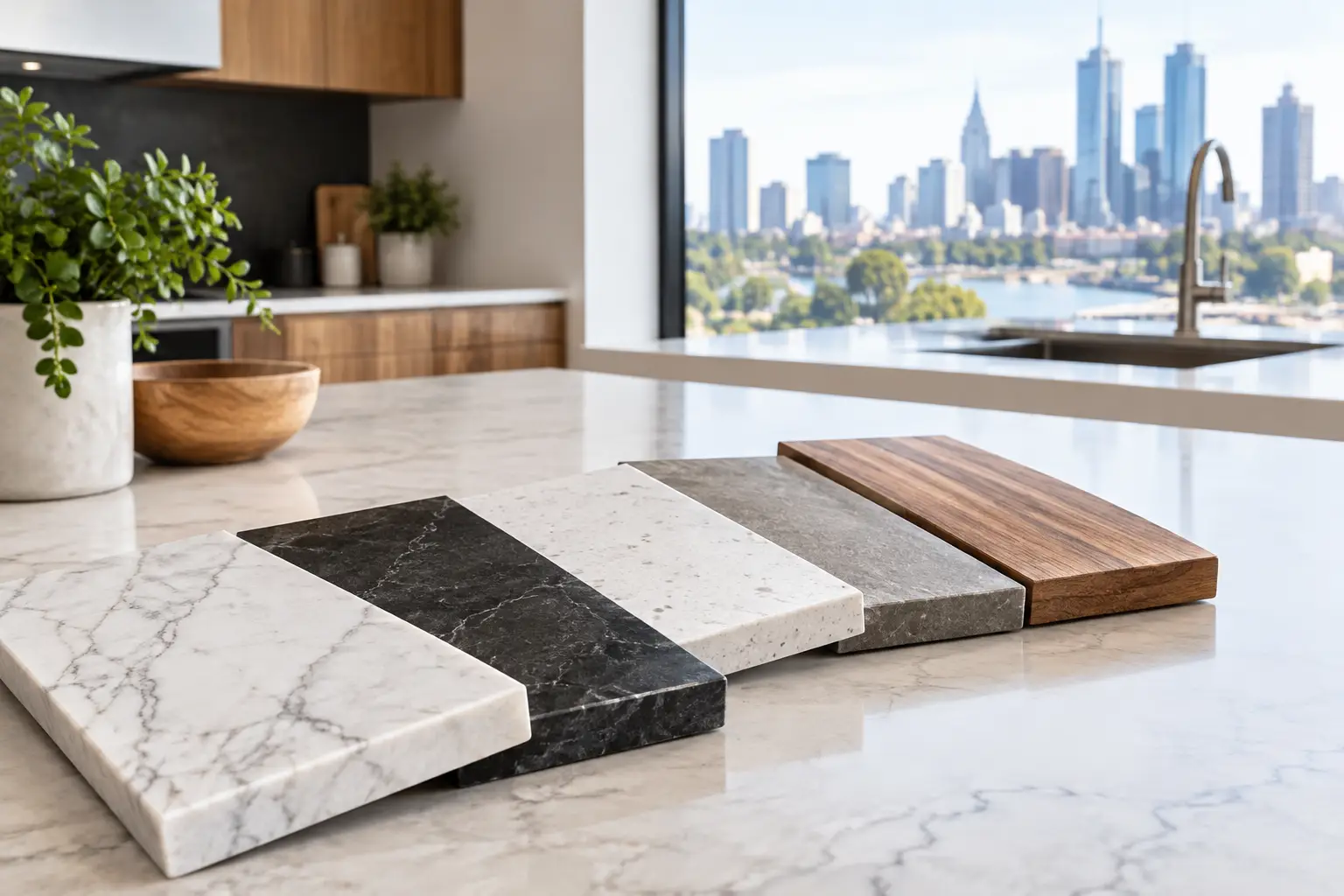
A kitchen benchtop has to handle far more than it gets credit for. It is where groceries land, school lunches are packed, meals are prepared, and guests tend to gather. This benchtop materials review guide is designed to help Melbourne homeowners choose a surface that suits the way they live, not just the look they want on renovation day.
The right choice comes down to more than color and price. Heat, scratches, cleaning habits, cabinet design, available light, and the age of your home can all affect which material makes sense. A beautiful benchtop that requires care your household will not realistically give it can quickly become a source of frustration. The best result is one that looks considered, works hard, and fits the renovation budget without unpleasant surprises.
Start With How Your Kitchen Will Be Used
Before comparing samples, think honestly about daily use. A busy family kitchen with frequent cooking, homework, and entertaining needs a different surface than a low-use apartment kitchen or a carefully styled but lightly used space. If you regularly place hot cookware down, prepare food directly on the counter, or want minimal upkeep, durability should carry more weight in the decision.
Your layout matters too. Large islands, long waterfall edges, and deep overhangs can increase both material and installation costs. Some benchtops need more support than others, while certain surfaces have limits on unsupported spans. An experienced renovation team should discuss these details while the kitchen is being designed, rather than after cabinetry has been ordered.
Benchtop Materials Review Guide: The Main Options
Natural stone
Natural stone, including granite and marble, brings genuine character that manufactured materials cannot copy exactly. Every slab has variation in veining, movement, and tone, which can make the benchtop feel like a feature rather than a background finish. Granite is generally the more practical natural-stone option for a hardworking kitchen, while marble delivers a softer, more luxurious look.
The trade-off is maintenance and variation. Many natural stones require sealing, and marble in particular can etch or stain from acidic foods and drinks. Lemon juice, vinegar, and red wine may leave marks that are part of the material’s lived-in character but can disappoint homeowners expecting a perfectly uniform finish. Natural stone is a strong choice for people who value authenticity and are comfortable with a little ongoing care.
Porcelain and sintered stone
Porcelain and sintered stone surfaces are popular for their clean, contemporary appearance and strong resistance to heat, stains, and UV exposure. They can suit kitchens that open to outdoor entertaining areas, especially when a consistent look across indoor and outdoor surfaces is part of the plan. Many designs convincingly resemble marble, concrete, or natural stone while offering less day-to-day maintenance.
These materials are hard, but they are not indestructible. The edges can chip if struck sharply, and precise fabrication is essential because slabs can be thinner and more demanding to work with than other options. This is not a material to choose solely from a small sample. Ask to see a full slab or a larger display so you can judge the pattern, finish, and edge profile properly.
Laminate
Modern laminate is a practical and cost-effective option that has come a long way from the finishes many homeowners remember. It is available in convincing stone, timber, and textured designs, and it can help free up renovation budget for quality cabinets, storage upgrades, appliances, or lighting. For investment properties, first-home renovations, or kitchens where value is the priority, laminate deserves serious consideration.
Its limitations are mainly around heat and impact. Hot pans should not be placed directly on the surface, water should not be allowed to sit around joins, and sharp knives can cause damage. A quality installation with well-finished edges makes a major difference to how laminate performs and looks over time. It is not the premium choice for every project, but it can be the smartest one when the budget calls for balance.
Solid surface
Solid surface benchtops offer a smooth, modern finish with inconspicuous joins and the possibility of integrated sinks. They are non-porous, comfortable to touch, and available in a wide range of understated colors. For a minimalist kitchen, they can create a very clean, continuous look.
They are less heat-resistant than porcelain or natural stone, so trivets and sensible care are still needed. Fine marks can occur, particularly on darker colors, but one advantage is that many minor scratches can be repaired. Solid surface works well when visual continuity and easy cleaning matter more than having a heavily patterned slab.
Timber
A timber benchtop adds warmth quickly, especially in homes that need a softer contrast to white cabinetry, tile, or polished concrete floors. It can work beautifully on an island, breakfast bar, or smaller feature area paired with a more durable main preparation surface. Timber also suits heritage homes and contemporary kitchens that need a more natural finish.
However, it needs commitment. Timber can mark, dent, and change color over time, and it must be maintained correctly to protect it from water and food stains. It is usually better suited to areas away from the main sink and cooktop rather than being used everywhere. For the right homeowner, those changes are part of the appeal. For someone seeking a low-maintenance kitchen, they may be a reason to look elsewhere.
Stainless steel
Stainless steel is highly hygienic, heat-resistant, and exceptionally practical. It is a familiar choice in commercial kitchens for good reason, and it can look striking in modern, industrial, or architect-designed homes. Integrated sinks, splashbacks, and benchtops can be fabricated as one continuous working surface.
The finish will show fingerprints and fine scratches, particularly early on. Some homeowners enjoy the patina that develops; others prefer a surface that stays visually unchanged. Stainless steel is a specialist look, but for serious cooks or compact kitchens where easy cleaning is a priority, it is worth considering.
A Note on Engineered Stone
If you are researching older kitchen inspiration, you will see plenty of references to engineered stone, often called quartz composite. Australian regulations have changed, and new engineered stone benchtop installations are generally not an option due to the national ban introduced to protect workers from respirable crystalline silica exposure.
This makes early material planning especially useful. Rather than trying to match an older engineered stone selection, homeowners can explore porcelain, sintered stone, natural stone, laminate, or solid surface alternatives that achieve a similar color or style. A clear discussion during the quote stage helps avoid redesigns and delays later in the project.
Look Beyond the Sample
A small square sample is useful for narrowing down colors, but it cannot tell you everything. View material choices alongside cabinet doors, flooring, wall tile, and paint colors whenever possible. Morning and afternoon light can change the appearance of white, gray, and warm neutral benchtops more than expected.
Pay attention to finish as well as color. A polished surface reflects light and can make a compact kitchen feel brighter, but it may show smudges more readily. Honed, matte, and textured finishes often feel softer and more forgiving, although their cleaning requirements vary by material. There is no universal best finish, only the best fit for your home and routines.
Edge details also influence the final result. A simple square edge is clean and cost-conscious. A thicker profile can make a standard-depth benchtop feel more substantial, while waterfall ends create a strong focal point on an island but require additional material and careful planning. These decisions should be priced clearly from the start so the finished kitchen aligns with the budget you approved.
Choose for the Long Term, Not the Display Home
The most successful kitchens are not built around a single trend. They are planned around practical storage, reliable materials, and finishes that still feel right after years of daily use. A bright white porcelain surface may be ideal for one household, while another will be happier with warm laminate that leaves room in the budget for better drawers and a larger pantry.
At DY Construction Group, we help homeowners make these choices in the context of the whole renovation, including cabinetry, layout, installation requirements, and realistic costs. Bring your priorities to the first conversation – whether that is easy cleaning, a statement island, durability for a young family, or a kitchen that adds long-term appeal to your property. The right benchtop is the one that supports the life happening around it.