

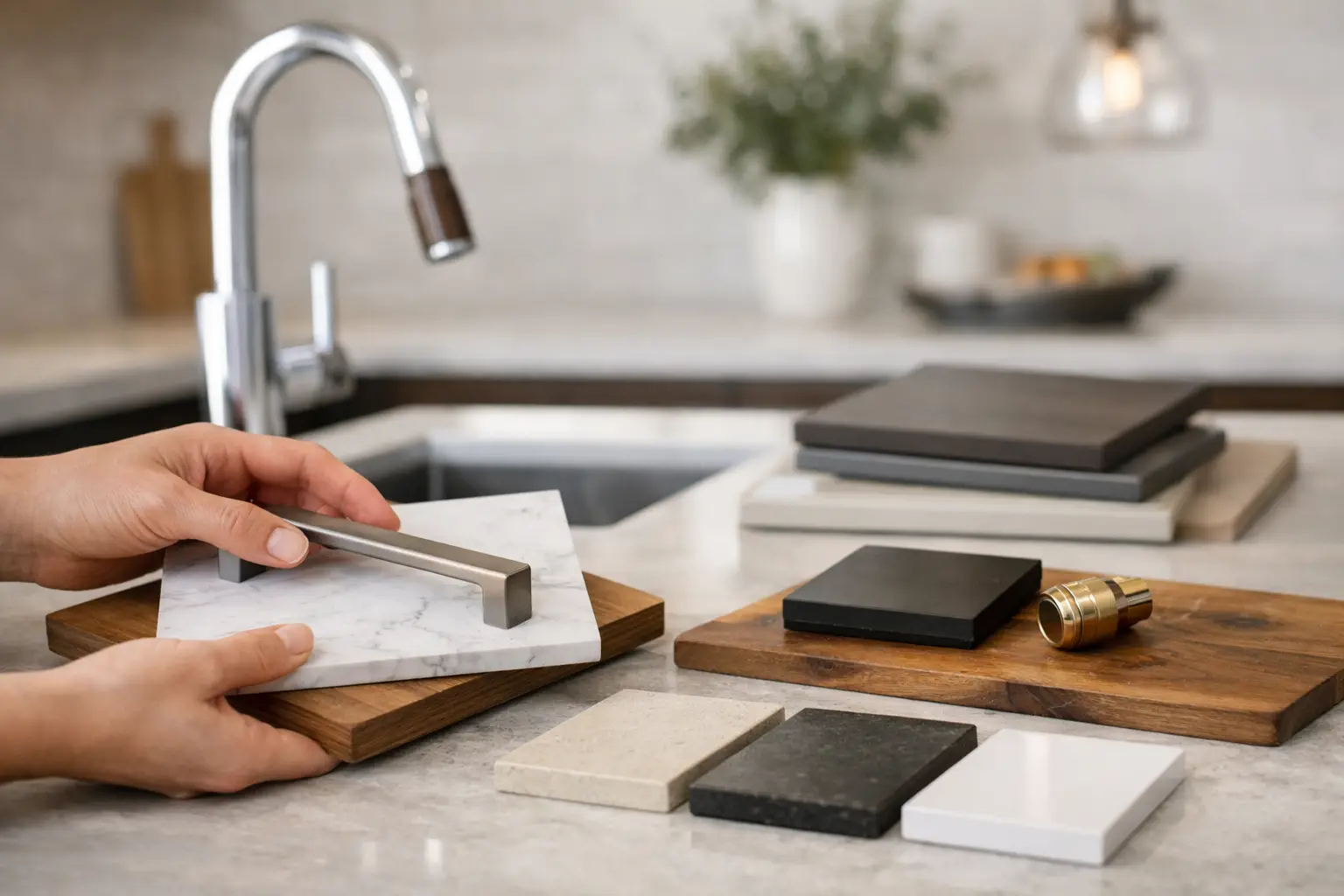
A kitchen can look impressive in a showroom and still be wrong for the way your household lives. A glossy cabinet door may show every fingerprint. A pale countertop may need more care than a busy family can give it. When deciding how to choose kitchen finishes, the best starting point is not a color sample. It is an honest look at how you cook, clean, entertain, and use the room every day.
The right finishes bring a renovation together. They also determine how well your kitchen handles heat, spills, cleaning, moisture, and years of regular use. Choosing them with a clear plan helps you create a kitchen that feels personal without becoming difficult to maintain or expensive to repair.
Start With How Your Kitchen Works
Before selecting cabinet colors, countertop slabs, or tile samples, consider the practical demands on each surface. A kitchen used for quick breakfasts and occasional dinners has different needs than one used for family cooking every night, baking on weekends, and entertaining friends.
Think about who uses the space and what tends to happen there. Young children, pets, frequent guests, and enthusiastic home cooks all place more pressure on finishes. Matte cabinet fronts can reduce the appearance of fingerprints, while a highly polished surface may require more frequent wiping. A textured backsplash can add character, but heavily textured tile and wide grout lines can be harder to clean behind a cooktop.
There is no single best material for every kitchen. The right choice depends on balancing appearance, durability, maintenance, and budget. A well-planned renovation makes those trade-offs early, rather than discovering them after installation.
Choose Kitchen Finishes From the Largest Surfaces First
The simplest way to keep decisions organized is to choose the finishes that cover the most visual area before moving to smaller details. Cabinets, countertops, flooring, and backsplashes set the foundation. Handles, fixtures, and lighting then add contrast and personality.
Cabinetry usually has the greatest visual impact. For a calm, long-lasting result, choose a cabinet color that suits the light in your room and the broader style of your home. Warm whites, soft grays, natural oak tones, and muted greens can all work well, but the undertone matters. A white that looks crisp in one home can appear yellow, blue, or gray in another depending on daylight, wall colors, and surrounding materials.
Countertops should be chosen with equal care. They sit next to cabinetry, reflect light, and receive some of the hardest daily wear. Bring cabinet samples when viewing countertop options and look at them together in natural light. Do not rely on a small online image or a single showroom display.
Once cabinets and countertops are selected, the backsplash has a clearer role. It can be quiet and practical, or it can provide a focal point. If the countertop has strong veining or movement, a simpler backsplash often prevents the room from feeling too busy. If the countertop is plain, tile can introduce pattern, texture, or a more distinctive color.
Compare Materials by Real Maintenance Needs
A finish is only a good choice if you are comfortable caring for it. Some homeowners love the character that develops in natural materials. Others want a kitchen that can be cleaned quickly after a busy day. Both approaches are valid, but they call for different products.
Countertops
Engineered stone and porcelain are popular for their consistency, durability, and relatively straightforward care. They are often a practical fit for active homes because they resist staining and do not generally need the ongoing sealing associated with some natural stone options.
Natural stone, such as marble, provides variation that cannot be replicated exactly. It can be beautiful, but it may etch or stain more easily depending on the material and finish. It suits homeowners who appreciate a lived-in surface and are prepared to follow the recommended care routine.
Laminate has improved significantly and can offer a cost-effective way to achieve a contemporary look. It is not as resistant to heat and impact as many stone or porcelain products, so it needs sensible daily use. Timber countertops add warmth but need protection from standing water, heat, and scratches.
Cabinet finishes
Painted cabinets offer a wide range of colors and can suit traditional, transitional, and modern kitchens. They may show chips over time in high-contact areas, particularly near handles and drawer edges. Laminates and thermoformed surfaces are practical, consistent options that can be easier to clean, while timber veneer brings natural grain and warmth with a more refined appearance.
For many households, a durable matte or low-sheen cabinet finish is a sensible middle ground. It gives the kitchen a modern look without the constant reflection and fingerprint visibility of high gloss.
Flooring
Kitchen flooring needs to handle dropped utensils, spills, chair movement, and regular cleaning. Porcelain tile is highly durable and works well in many renovation styles, though grout selection and cleaning should be considered. Luxury vinyl plank can provide a softer feel underfoot and is often a practical option for busy households. Timber creates warmth and continuity through open-plan living spaces, but it requires care around water and may show wear more readily.
Build a Color Palette With Balance
A cohesive kitchen does not mean every surface must match. In fact, matching too closely can make the room feel flat. The goal is to create a balanced mix of base colors, undertones, texture, and contrast.
A helpful approach is to choose one dominant finish, one supporting finish, and one accent. For example, warm white cabinetry might be the dominant finish, a light oak island the supporting finish, and brushed brass handles the accent. A charcoal island can create contrast in an otherwise light kitchen, while black fixtures can add definition without requiring black cabinetry or dark countertops.
Pay close attention to undertones. Cool gray cabinets can clash with a creamy countertop, while warm timber may feel disconnected beside a blue-gray tile. Samples should be viewed together at different times of day, ideally in the actual room. Morning sun, afternoon shade, and artificial lighting can all change how a finish appears.
If your kitchen connects directly to a living or dining area, consider finishes beyond the kitchen itself. Flooring, wall color, and visible joinery should feel connected to the rest of the home. This is especially valuable in open-plan renovations, where a kitchen is seen from several angles rather than as a separate room.
Use Texture and Hardware With Purpose
Texture prevents a neutral kitchen from feeling plain. Timber grain, fluted glass, handmade-look tile, brushed metal, or a honed countertop can introduce depth without adding more colors. The key is restraint. If every finish has a strong pattern or texture, the overall result can feel crowded.
Hardware is small in scale but significant in daily use. Test handles and pulls in person when possible. They should feel comfortable, fit the style of the cabinetry, and be positioned for easy access. Brushed nickel, chrome, black, and brass can all work well, but choose a finish you can repeat thoughtfully across taps, handles, and lighting.
Perfect matching is not always necessary. Mixing metals can look intentional when there is a clear hierarchy, such as one dominant metal finish with a smaller accent used in lighting or decorative details. Randomly combining several finishes usually looks less considered.
Set a Budget That Protects the Important Surfaces
Kitchen finishes can quickly absorb a renovation budget, particularly when several premium materials are selected at once. Prioritize the surfaces you touch and see most often: cabinetry, countertops, flooring, and fixtures. These are difficult or disruptive to replace later.
Save carefully on features that are easier to update, such as handles, pendants, stools, or wall paint. This does not mean choosing the cheapest option for every fixed surface. It means spending where performance and workmanship will matter over the long term.
Ask for clear information about what is included in each product price. Edge profiles, cutouts, sealing, splashback installation, trim pieces, delivery, and labor can affect the final cost. Transparent planning helps prevent a finish package that looks affordable at first but creates unexpected expenses during construction.
Think Beyond the First Week After Installation
Trend-led finishes can be appealing, and there is room for personality in every kitchen. The question is whether you will enjoy the choice after the novelty has passed. A bold tile may be perfect as a small accent, while an expensive patterned countertop can be harder to live with across a large area.
For a kitchen that holds its value, keep permanent finishes relatively timeless and bring stronger trends through elements that can change more easily. This could mean classic cabinetry and countertops paired with statement lighting, colorful seating, artwork, or hardware.
A skilled renovation team can help you compare samples, understand material limitations, and coordinate every surface before work begins. For homeowners in Melbourne’s northern suburbs, DY Construction Group approaches these decisions with the same care given to installation, so the finished kitchen is practical, cohesive, and built for daily life.
Choose finishes that support the way you want to live at home. When every material has a purpose, your kitchen will feel considered on day one and continue to work hard long after the renovation is complete.