

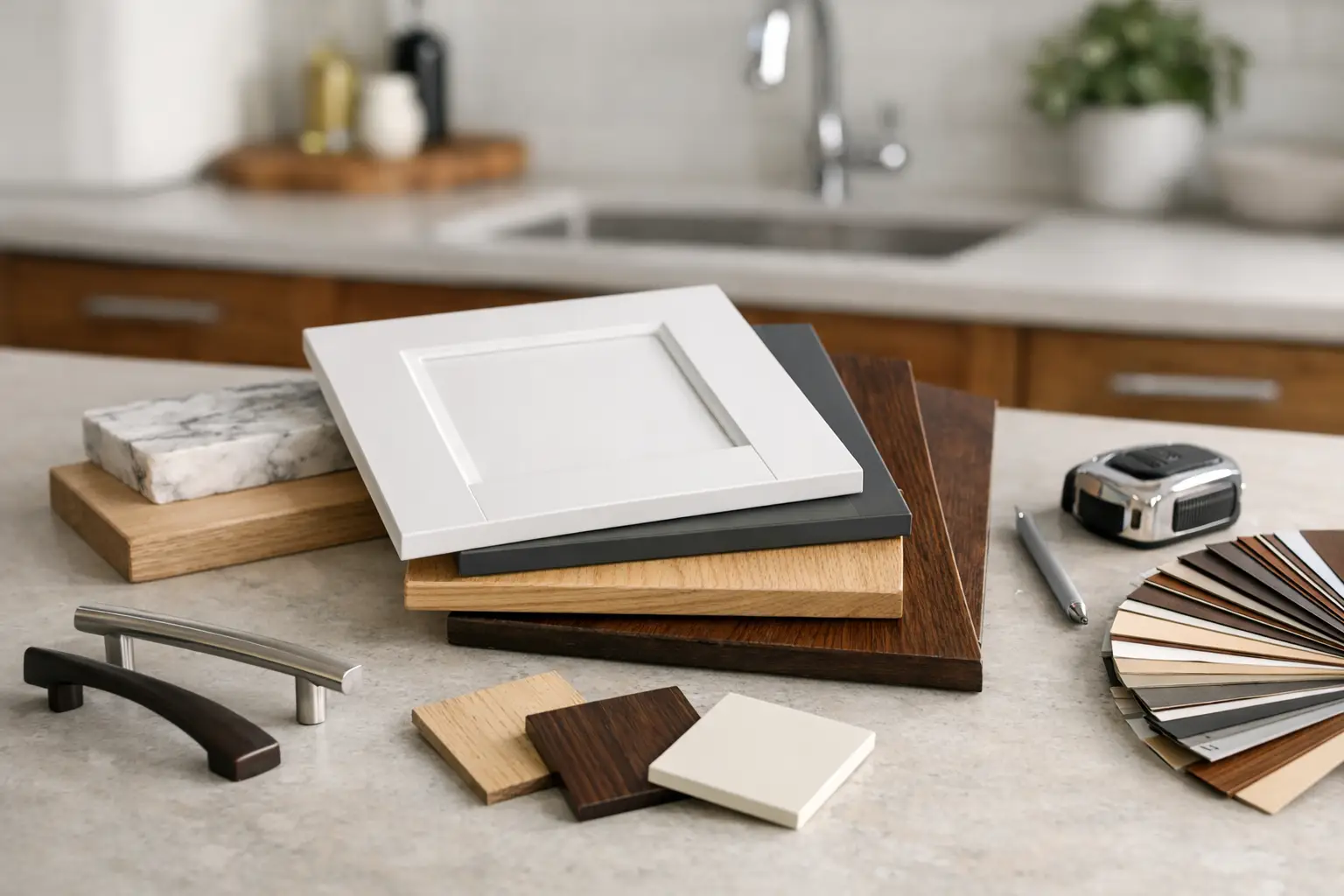
A cabinet door can look excellent in a showroom and still be the wrong choice for a busy family kitchen. Steam from the kettle, spills around the sink, children pulling handles, and years of daily opening and closing all test the material beneath the finish. This kitchen cabinet materials review looks beyond appearance to help homeowners choose cabinetry that suits their budget, lifestyle, and renovation goals.
For most kitchens, there is no single “best” cabinet material. The right choice depends on where the cabinets will sit, the style you want, how much maintenance you are comfortable with, and whether you are prioritizing a premium finish or long-term value. A well-planned cabinet build also considers hardware, edge treatment, installation quality, and moisture protection. These details often matter just as much as the door material itself.
Start With the Cabinet Box, Not Just the Door
When comparing kitchen cabinetry, homeowners often focus on door styles and colors first. That makes sense visually, but cabinet boxes do the heavy lifting. They support benchtops, hold drawers and shelves, and need to stay square over time.
Quality cabinet boxes are commonly made from moisture-resistant MDF, particleboard, or plywood, then finished with a durable surface such as melamine. In a dry, well-ventilated kitchen, high-quality particleboard or MDF cabinetry can perform very well and offers a clean, consistent base for modern joinery. It is also an economical choice for homeowners who want a tailored layout without paying for solid timber throughout.
Plywood is generally stronger and more resistant to movement than particleboard, particularly when well sealed. It can be a worthwhile upgrade for heavy-use kitchens, large drawers, open shelving, or areas around the sink. The trade-off is cost. Plywood is usually more expensive, and its raw edges need considered finishing if they will be visible.
Whatever material you choose, ask how exposed edges, cutouts, and sink cabinets will be protected. Water damage usually begins at an unsealed edge or a small leak left unnoticed, not because an entire kitchen was made from the wrong board.
Kitchen Cabinet Materials Review: Door Options
Cabinet doors set the visual tone of the room and receive the most direct wear. These are the main materials and finishes homeowners should compare.
MDF: Smooth, Flexible, and Popular
Medium-density fiberboard, known as MDF, is one of the most widely used materials for painted cabinet doors. It has a smooth, even surface with no grain, knots, or natural variation. That makes it especially suitable for crisp painted finishes and detailed profiles such as shaker doors, routed panels, and curved elements.
MDF is stable when manufactured and installed correctly, and it provides a refined look at a more accessible price than painted solid wood. For a modern kitchen with a flawless painted finish, it is often the practical choice.
Its weakness is moisture. MDF can swell if water reaches exposed or damaged edges, especially near a dishwasher, sink, or floor-level cabinet. A quality painted or wrapped finish, careful sealing, and prompt attention to leaks are essential. MDF is also heavy, so proper hinges and reliable installation matter.
Plywood: Strong and Suited to Hardworking Kitchens
Plywood is built from thin layers of wood bonded together with the grain alternating for strength. It is commonly used for cabinet boxes but can also be used for doors, especially in contemporary kitchens where a timber veneer or exposed ply edge is part of the design.
This material holds screws well and tends to handle humidity changes better than standard MDF or particleboard. It is a sensible choice for homeowners who want a durable construction material behind premium door finishes, or who expect their kitchen to handle heavy daily use.
Not all plywood is equal. Lower-grade sheets may have voids, uneven faces, or less reliable bonding. Cabinet-grade plywood costs more, so it should be selected where its performance benefits justify the investment rather than used automatically in every part of the kitchen.
Solid Wood: Character With More Care Required
Solid wood doors bring warmth, texture, and natural character that manufactured boards cannot fully replicate. Oak, walnut, maple, and other hardwoods can work beautifully in traditional, transitional, and contemporary kitchens. Each door has natural variation, which many homeowners see as part of its appeal.
Wood does require realistic expectations. It expands and contracts as humidity changes, so minor movement at joints or around panels can occur over time. It can also dent, scratch, or change color with sunlight. These are not necessarily flaws, but they do mean solid timber suits homeowners who appreciate a lived-in finish rather than a perfectly uniform surface.
A timber veneer door is often a smart middle ground. It uses a real wood surface over a stable core, providing the look of natural timber with better consistency and a lower cost than solid wood. The quality of the veneer and edge treatment makes a significant difference to its final appearance and durability.
Laminate: Practical, Durable, and Design-Friendly
Laminate cabinet fronts are made by bonding a decorative surface to a board core. Modern laminate has moved well beyond basic flat colors. It can replicate wood grain, stone, concrete, linen textures, and matte painted finishes with impressive consistency.
For active households, laminate is one of the most practical options. It is easy to clean, resists many stains and scratches, and does not require refinishing. It also offers a broad range of colors and patterns, helping homeowners achieve a coordinated design at a controlled budget.
The main consideration is the edge. A poorly finished laminate edge can chip or lift over time, particularly near heat and moisture. A well-made door with durable edge banding and professional installation provides a much better result than a budget flat-pack alternative.
Thermofoil: A Budget-Friendly Choice With Limits
Thermofoil doors are typically MDF doors wrapped in a vinyl-like film using heat and pressure. They can create a smooth, handle-free, or profiled look at a lower price than painted cabinetry. Their nonporous surface is easy to wipe down, which appeals to many homeowners.
However, thermofoil is less forgiving around high heat. Doors beside an oven, dishwasher, or other heat source may be more vulnerable to peeling or lifting if the material or installation quality is poor. It is best considered for kitchens where budget is the leading factor and heat protection has been planned carefully.
Match the Material to How You Use the Kitchen
A kitchen used for quick weekday meals has different demands from one that hosts large family gatherings several times a week. For a low-maintenance, modern renovation, laminate doors over a quality moisture-resistant cabinet box can offer excellent value. For painted shaker cabinetry, MDF doors provide clean lines and dependable consistency. For homeowners who want a natural, architectural feature, timber veneer or solid wood may be worth the additional investment.
Think about placement as well. The cabinet beside the dishwasher, the sink base, and the area around a cooktop need more attention than a tall pantry at the other end of the room. A good cabinet plan can use different materials strategically instead of spending the same amount everywhere.
Color also affects maintenance. Very dark matte finishes can show fingerprints, while high-gloss doors may reveal smudges and fine scratches. Textured laminates and mid-tone timber finishes are often more forgiving in family homes. The best finish is one you will still be happy to clean and live with five years from now.
Do Not Overlook Hardware and Workmanship
Even premium doors can disappoint if hinges sag, drawer runners bind, or cabinets are installed out of level. Soft-close hinges, full-extension drawer runners, sturdy drawer bases, and accurate alignment have a direct impact on everyday use.
Professional installation also protects the material you selected. Cabinets need to be securely fixed to the wall, leveled before benchtops are fitted, and carefully sealed around wet areas. Clear planning for appliance clearances, ventilation, and plumbing access helps avoid later damage and unnecessary alterations.
At DY Construction Group, material recommendations should always follow a practical conversation about your household, design preferences, and budget. A clear quote that identifies door finishes, internal cabinet materials, hardware, and installation scope gives you a far more reliable basis for comparison than a single cabinet price.
The strongest kitchen is not necessarily the one built from the most expensive material. It is the one where every choice, from the sink cabinet edge to the drawer runner, suits the way your home works and is installed with care.