
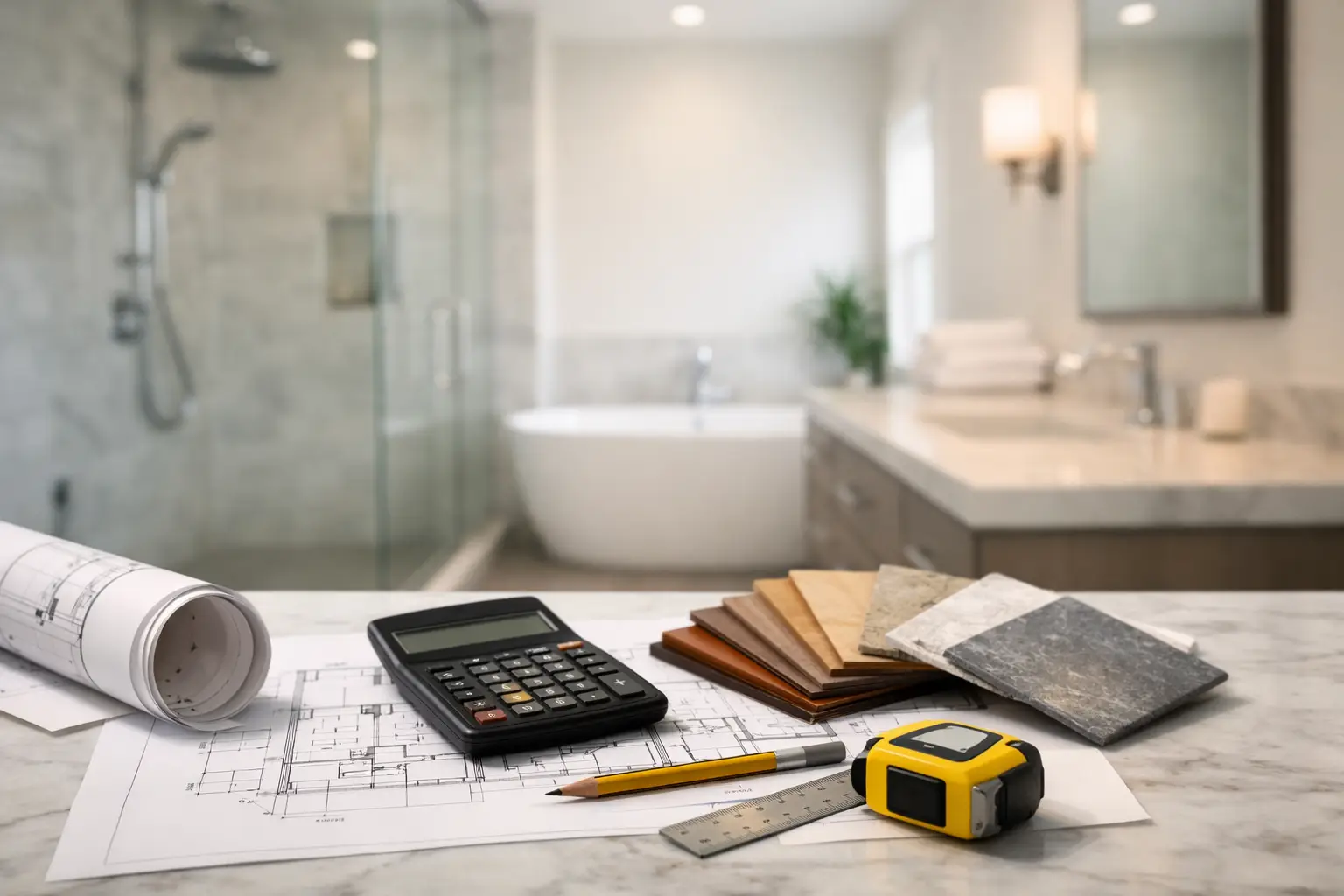
Sticker shock usually happens in the same moment – when a homeowner realizes the bathroom they pictured online is not the same as the bathroom they can build at the same price. A solid bathroom renovation cost guide helps close that gap early, so you can budget with more confidence and make decisions that hold up once the work begins.
Bathroom remodel pricing is never just about tile, a vanity, and a shower screen. The real cost comes from a mix of labor, layout, waterproofing, plumbing, electrical work, material quality, and the condition of the room behind the walls. If you are planning a renovation, the smartest approach is to understand what drives cost before you choose finishes that push the budget off track.
What a bathroom renovation cost guide should actually tell you
Many cost articles stay too broad to be useful. Homeowners do not just want a random number. They want to know why one bathroom costs far more than another, what is worth spending on, and where the hidden costs usually appear.
A useful bathroom renovation cost guide should help you think in layers. First, there is the scope of work. Are you updating surfaces in roughly the same layout, or rebuilding the room from the studs? Then there is the finish level. A bathroom with standard fixtures, straightforward tile, and simple lighting will land very differently from a room with a frameless glass shower, custom joinery, underfloor heating, and feature stone.
The other major factor is the condition of the existing space. Bathrooms often hide problems. Water damage, uneven floors, poor ventilation, old plumbing, and outdated wiring can all turn what looked like a cosmetic upgrade into a more involved project.
The biggest factors that affect bathroom renovation cost
Size matters, but not always in the way people think. A small bathroom can still be expensive because it contains nearly all the same trade work as a larger one. Demolition, waterproofing, plumbing connections, electrical rough-in, tiling, and fixture installation still need to happen, even if the footprint is compact.
Layout changes are one of the clearest cost drivers. If you keep the toilet, shower, and vanity in the same positions, you may save on plumbing changes and simplify the job. If you move drains or reroute supply lines, the budget usually climbs quickly. Sometimes that extra spend is worth it because the room functions much better. Sometimes it is a costly change with only a minor visual payoff.
Finish selections also make a major difference. Large-format tiles can look clean and modern, but depending on the product and installation conditions, they may cost more than standard tile. Wall-hung vanities, recessed niches, premium tapware, custom mirrors, and designer lighting all lift the final figure. None of these are bad choices. The key is understanding that several small upgrades can quietly add up.
Labor is another major part of the budget. Bathrooms require coordination across multiple trades, and good work matters here more than almost anywhere else in the house. Waterproofing, drainage falls, ventilation, and precise installation are not areas where cutting corners pays off. A cheap bathroom renovation can become a very expensive repair if the workmanship fails.
Budget tiers and what changes between them
A lower-cost renovation usually focuses on function and refresh rather than major transformation. You may keep the same layout, choose standard fixtures, use practical tile selections, and avoid custom work. This kind of project can still look excellent if the design is clean and the work is well executed.
A mid-range renovation typically gives you more flexibility. This is where many homeowners land because it balances improved style with sensible spending. You might upgrade the vanity, choose better-quality tile and tapware, improve lighting, add storage, and create a more polished overall finish without stepping into fully custom pricing.
A high-end bathroom renovation usually includes more structural or layout changes, premium finishes, and more detailed craftsmanship. Think full-height feature tiling, custom joinery, frameless glazing, upgraded lighting design, underfloor heating, and higher-spec fixtures throughout. The result can be impressive, but the budget grows not just because materials cost more, but because installation often becomes more complex too.
Where hidden costs tend to appear
The most common surprise is what is found after demolition. Water damage around showers, decayed subfloors, mold, and walls that are not straight are all common issues in older bathrooms. These are not cosmetic details. They need to be corrected before the new room goes back together.
Another hidden cost is compliance-related work. If your current bathroom has poor ventilation or outdated electrical elements, your renovation may need upgrades to bring the room up to a safer, more reliable standard. Homeowners sometimes compare their quote to a friend’s project without realizing the underlying conditions were very different.
There is also the risk of underestimating fixture and finish costs. A toilet might seem like a simple line item until you compare entry-level models with premium concealed-cistern options. The same goes for shower fittings, mirrors, basins, accessories, and tile trim. The look of a bathroom is built from many pieces, and each choice shifts the budget.
How to control cost without lowering quality
The best way to control spending is to be clear about priorities. Decide early what matters most. For one homeowner, that may be a larger shower and better storage. For another, it may be durable finishes that are easy to clean. Once priorities are set, it becomes easier to spend where it counts and simplify the rest.
Keeping the existing layout is often one of the strongest cost-saving moves. If the room already works reasonably well, you can invest in better materials and workmanship instead of moving plumbing. That usually gives a better return than blowing the budget on changes that are hidden once the job is complete.
Choose materials with both appearance and maintenance in mind. Some products look great in a showroom but require more upkeep in daily use. A bathroom should not just photograph well on handover day. It should perform well for years.
It also helps to avoid mixing too many statement features in one small room. A bathroom does not need every trend at once. A restrained design often looks more refined, and it is usually easier to keep on budget.
Why quotes can vary so much
If you receive multiple quotes, do not compare the bottom line alone. One contractor may include demolition, waste removal, waterproofing, fixture installation, painting, and project management, while another may exclude several of those items. What looks cheaper at first can become more expensive once missing pieces are added back in.
Detailed quoting matters because it gives you a clearer view of scope, allowances, and assumptions. It also reduces the chance of budget blowouts caused by vague inclusions. Clear communication at the quoting stage usually leads to a smoother project overall.
This is where working with an organized renovation team can make a real difference. Companies like DY Construction Group build trust by being upfront about scope, pricing, and process, which is exactly what homeowners need when they are making decisions that affect both budget and daily life.
Planning your bathroom renovation cost guide into a real project
The most practical way to use a bathroom renovation cost guide is not as a promise of one exact number, but as a planning tool. Start with a realistic budget range, then separate must-haves from nice-to-haves. Allow room for site conditions, especially in older homes, and make finish selections early enough that they can be priced properly.
If you are renovating for long-term living, focus on choices that improve comfort and function every day. Better storage, smarter lighting, easier-clean surfaces, and a well-built shower often matter more than a flashy detail that strains the budget. If resale is part of the equation, aim for broad appeal and quality execution rather than highly personal design choices.
A bathroom renovation is one of the more technical rooms to remodel, and that is why planning matters so much. Good budgeting is not about guessing low and hoping for the best. It is about understanding the trade-offs, choosing quality where it matters, and building a room that works as well as it looks.
The right budget is not the cheapest one. It is the one that lets you complete the job properly, with no shortcuts you will regret six months later.