

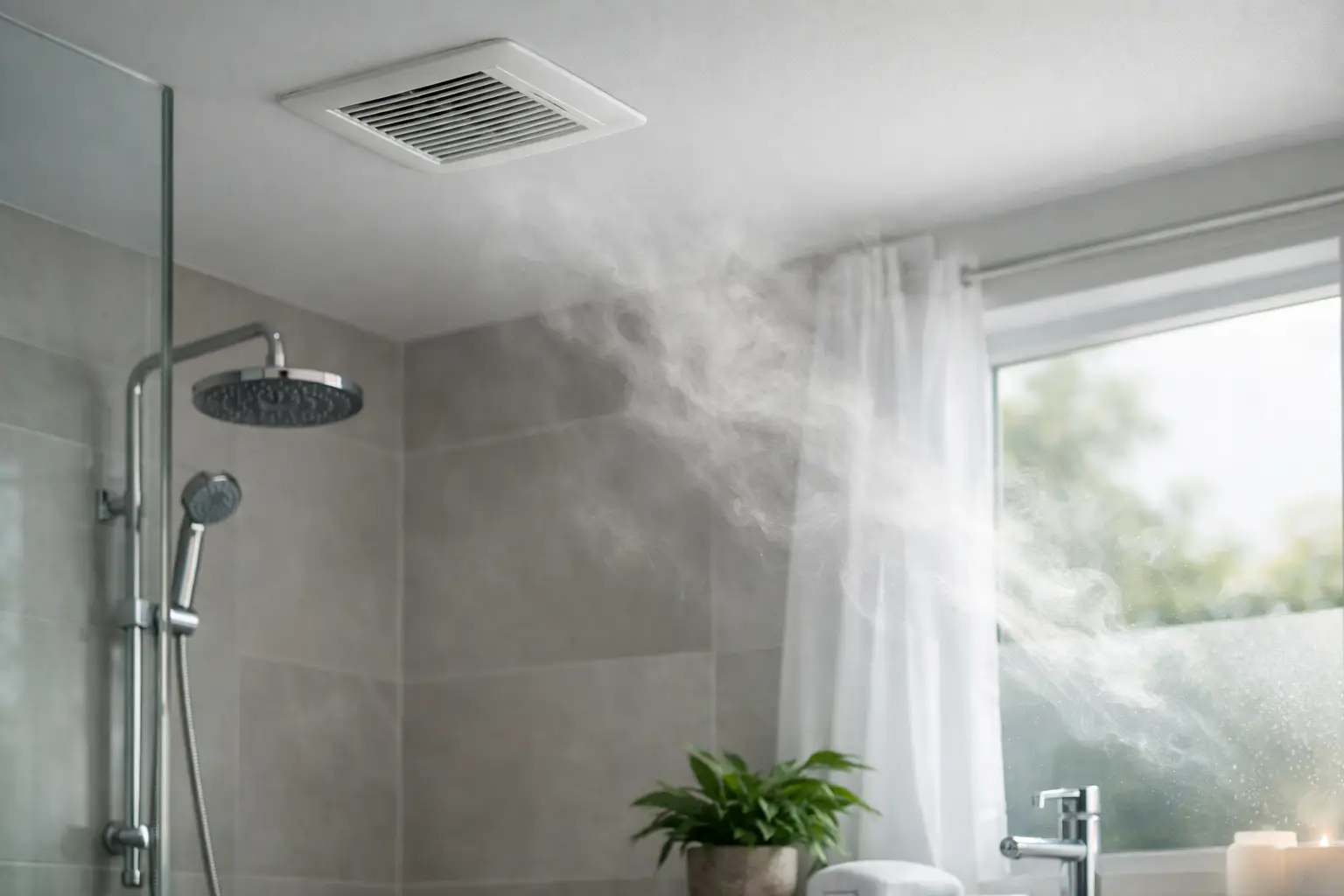
A bathroom can look freshly renovated and still fail where it matters most: behind the mirror, inside the vanity, and above the shower. If the room stays steamy long after a shower, learning how to improve bathroom ventilation is not just about comfort. It is about protecting paint, grout, cabinetry, ceilings, and the air your family breathes.
Poor ventilation often shows up gradually. You may notice water beading on windows, peeling paint near the ceiling, a persistent musty smell, or dark marks in silicone joints. Addressing those signs early is usually far simpler and less expensive than repairing moisture-damaged finishes later.
Start by Identifying the Ventilation Problem
Before replacing a fan or opening a window, work out what is actually happening in the room. A bathroom that smells damp may have an undersized exhaust fan, but it could also have a blocked exterior vent, a leaking pipe, poor insulation, or a fan that is rarely used long enough to clear the humidity.
A simple test can help. Run the exhaust fan while holding a single sheet of toilet paper near the grille. A properly working fan should hold the paper in place. If it does not, the fan may be weak, dirty, disconnected, or restricted by ductwork. This is a useful first check, but it does not confirm that moist air is reaching the outside. The duct route matters just as much as the fan itself.
Look at when condensation appears, too. If the mirror clears quickly but moisture remains on walls and the ceiling, the system may be moving some air without removing enough humidity. If the room is still damp an hour after bathing, the extraction rate, ducting, or operating time needs attention.
Choose an Exhaust Fan That Matches the Room
For most bathrooms, a correctly sized exhaust fan is the most reliable improvement. It draws humid air out at the source rather than relying on a cracked window or an open door to disperse it through the home.
Fan capacity is commonly measured in cubic feet per minute, or CFM. As a general starting point, bathrooms need around 1 CFM per square foot of floor area, with 50 CFM as a practical minimum for a small bathroom. Larger rooms, bathrooms with high ceilings, enclosed showers, or frequent family use may need more capacity. A bathroom with a separate toilet room may need its own extraction as well.
More power is not always the best answer. An oversized fan can be unnecessarily noisy, and noise encourages people to switch it off too soon. Look for a quiet model rated around 1.5 sones or less if possible. A quieter fan is more likely to be used consistently, which is what protects the room over time.
Prioritize Ducting, Not Just the Fan
A quality fan cannot perform properly if it is connected to poor ductwork. Flexible ducts that sag, long routes with several sharp bends, or ducts that are too narrow all reduce airflow. In colder roof spaces, uninsulated ducting can also cause condensation to form inside the duct, creating another moisture problem out of sight.
The best arrangement is usually a short, straight, appropriately sized duct that vents directly outdoors through a wall or roof cap. Exhausting into an attic, crawl space, or ceiling cavity simply transfers moisture to a place where it can damage framing, insulation, and ceiling materials. A licensed contractor can assess the duct route during a bathroom renovation and coordinate the required electrical and exterior work.
Use Controls That Keep Ventilation Running
The most effective fan is of little use if it stops the moment the shower does. Moisture remains in the room after bathing, particularly on cooler surfaces such as tile, glass, and painted drywall.
A timer switch is a straightforward upgrade. Set it to run for 20 to 30 minutes after a shower, then turn off automatically. This removes guesswork and reduces the chance of someone leaving the fan running for hours.
Humidity-sensing controls are another good option, especially for busy households. These switches detect rising moisture levels and turn the fan on automatically, then keep it running until humidity drops. They cost more than a standard switch, but they can be worthwhile in bathrooms used by children, guests, or tenants who may not think to operate the fan properly.
For a major remodel, consider a continuous low-speed fan with a boost function. This approach provides steady background ventilation, then increases extraction when someone showers. It can work well in tightly sealed homes, though the right setup depends on the home’s overall ventilation design and local building requirements.
Improve Natural Airflow Where It Helps
Windows can support bathroom ventilation, but they should not be the only strategy in most homes. Opening a window during and after a shower can release humid air, but effectiveness depends on outdoor conditions, wind direction, privacy, security, and whether air can move through the space.
If you have an operable bathroom window, make sure it opens fully and is not painted shut, obstructed by blinds, or difficult to reach. A privacy-friendly top-hinged window or louvered design can provide useful airflow without exposing the room. In humid weather, however, outdoor air may not reduce indoor moisture as quickly as expected. That is why mechanical extraction remains the dependable choice.
The gap beneath the bathroom door is also important. Exhaust fans need replacement air to work. If the room is tightly closed with no undercut at the door, the fan can struggle to pull air out. A small door undercut or a properly planned transfer grille can improve airflow without sacrificing privacy.
Reduce Moisture at Its Source
Ventilation works best alongside daily habits that limit the amount of water left in the room. Keep showers covered with a curtain that reaches inside the tub or use a well-sealed shower screen. After showering, use a squeegee on glass and wall tile. It takes less than a minute and significantly reduces the moisture that must evaporate into the room.
Hang towels so they can dry rather than leaving them bunched on the floor or over the edge of a shower screen. If the bathroom is compact, a heated towel bar can help, although it is not a replacement for exhaust ventilation. Check for plumbing leaks under the vanity, around the toilet, and inside shower walls as well. A fan cannot solve moisture caused by a concealed leak.
During a renovation, material choices can make maintenance easier. Moisture-resistant drywall in appropriate areas, properly waterproofed shower systems, quality grout and sealants, and water-resistant cabinetry all provide a stronger line of defense. They do not remove the need for ventilation, but they are better equipped to handle normal bathroom humidity.
Clean and Maintain the System
Dust accumulation is one of the most overlooked causes of weak bathroom ventilation. At least twice a year, switch off power to the fan, remove the cover, and vacuum dust from the grille and housing. Wash the cover with mild soap and let it dry fully before reinstalling it.
Inspect the exterior vent cover at the same time. Lint, leaves, insect nests, and damaged flaps can restrict airflow. If the fan becomes louder, vibrates, fails to start promptly, or produces noticeably less suction, arrange an inspection rather than assuming it is still doing its job.
A fan nearing the end of its service life may be worth replacing during a bathroom update. It is often more efficient to address ventilation while ceilings, walls, electrical connections, or duct routes are already accessible than to reopen finished surfaces later.
When a Bathroom Renovation Is the Right Time to Upgrade
Some ventilation problems can be fixed with a new fan or timer. Others need a more considered solution. If there is visible mold, recurring ceiling damage, no external ducting, or a layout that traps steam around an enclosed shower, a renovation is an opportunity to correct the underlying issue rather than cover it up.
A well-planned bathroom remodel considers fan placement, duct routing, window operation, door clearance, insulation, lighting, and waterproofing together. For homeowners planning a bathroom update, DY Construction Group approaches these practical details alongside the finishes you can see, helping create a space that remains comfortable and durable after the new look is complete.
If your bathroom is fogging up every day, do not wait for peeling paint or mold to make the decision for you. A quiet, correctly ducted fan, sensible controls, and a few consistent habits can keep the room drier, healthier, and easier to maintain for years to come.