
A kitchen can look newly renovated and still feel frustrating if the cabinets waste space, doors clash with appliances, or storage does not suit the way your family lives. That is where many homeowners ask, is custom joinery worth it? For a home you plan to enjoy for years, the answer is often yes – provided it solves real functional problems and is designed, built, and installed to a high standard.
Custom joinery is more than made-to-measure cabinets. It is cabinetry, shelving, wardrobes, vanities, media units, and storage designed around your room, your household, and the details that make daily life easier. The investment can be higher than an off-the-shelf option, but the difference is often visible every time you open a drawer, use a corner cabinet, or walk into a room that finally feels finished.
Is Custom Joinery Worth It? Start With How You Use the Space
Custom joinery delivers the strongest value when standard-sized products leave you compromising. Older homes, compact rooms, uneven walls, sloped ceilings, and awkward corners are common examples. Rather than filling gaps with cover panels or accepting dead space, tailored cabinetry can use the full width and height of the room.
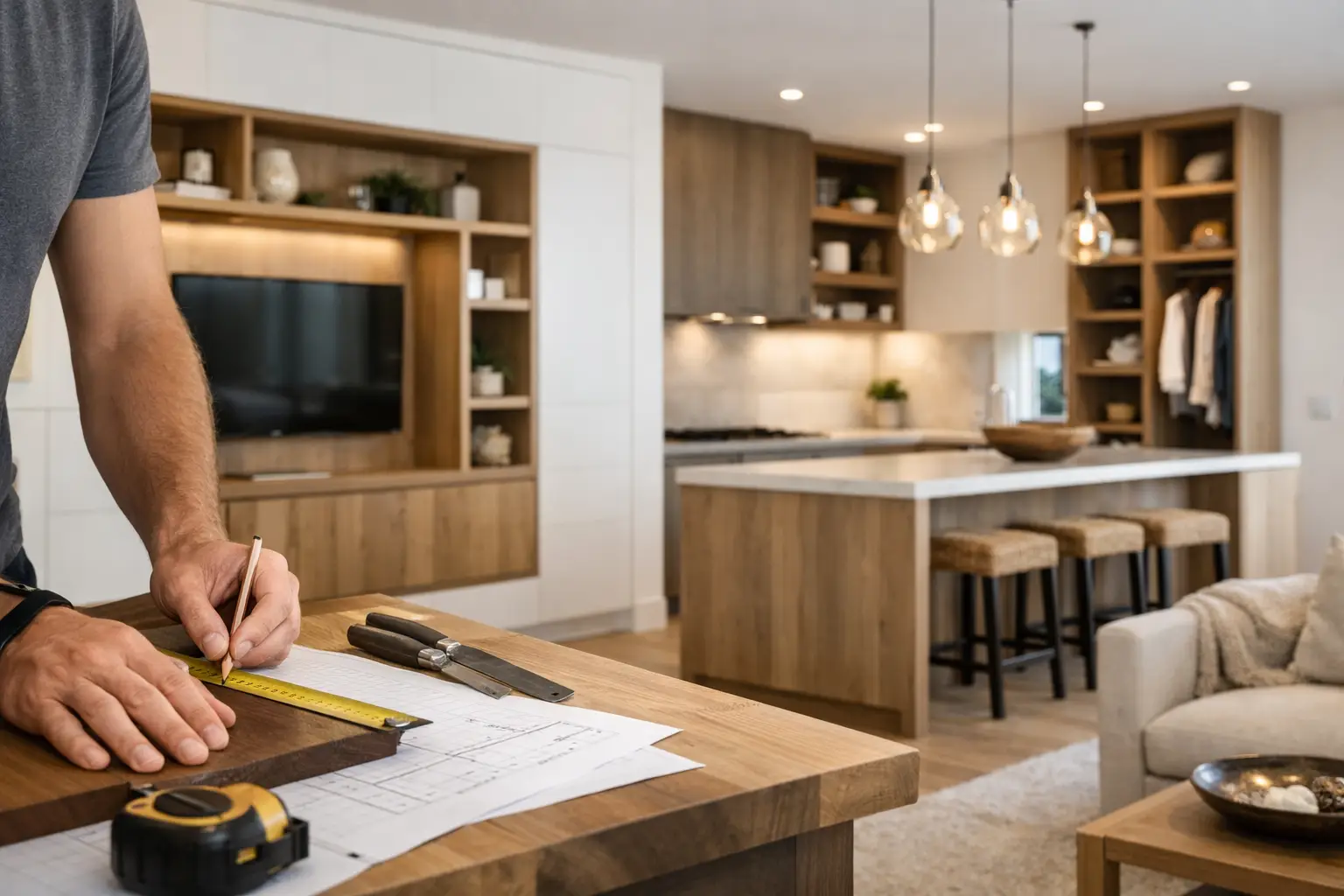
In a kitchen, that might mean drawers sized for pots and pantry items, cabinets built around an existing bulkhead, or a tall unit that brings everyday groceries within easy reach. In a bathroom, it may be a vanity that adds storage without making the room feel cramped. In a living room or home office, built-in joinery can give books, technology, paperwork, and children’s items a proper place instead of letting them take over the room.
The key question is not simply whether custom joinery looks better. Ask whether it removes a daily annoyance. If you are constantly short on storage, working around a poorly shaped layout, or replacing furniture that never quite fits, a tailored solution can improve how your home functions from morning to night.
Where the Extra Cost Goes
Custom joinery generally costs more because it involves more than selecting cabinets from a catalog. The process includes careful site measuring, design decisions, material selection, fabrication, hardware, delivery, and precise installation. A good joinery team also accounts for details that are easy to miss early on, such as power outlets, plumbing, flooring levels, wall conditions, appliance clearances, and the way doors and drawers will operate together.
Materials make a meaningful difference as well. Cabinet interiors, drawer runners, hinges, edge finishes, door profiles, and benchtop supports all affect how the joinery performs over time. A lower upfront price can be appealing, but it may come with thinner panels, limited sizing options, basic hardware, and a finish that shows wear sooner.
That does not mean every project needs premium materials in every location. A well-planned renovation puts the budget where it matters most. High-use drawers, kitchen cabinets, bathroom storage, and frequently handled doors deserve durable construction and reliable hardware. Less visible or low-use storage may allow for more cost-conscious choices without compromising the overall result.
When Custom Joinery Adds the Most Value
The financial return from custom joinery depends on the home, the room, and the quality of the work. It should not be viewed as a guaranteed dollar-for-dollar increase in resale value. However, well-designed storage and cohesive cabinetry can make a property more appealing to future buyers because they improve the features people notice immediately: usable space, organization, finish quality, and a sense that the home has been cared for.
It is particularly worthwhile in kitchens, bathrooms, laundries, entry areas, and bedrooms with limited storage. These spaces have a practical purpose, and buyers tend to notice quickly when cabinetry is undersized, poorly planned, or visibly worn. A kitchen with deep drawers, an integrated pantry, and cabinets that fit cleanly around appliances can make the whole renovation feel more considered.
For homeowners planning to stay put, the value is often even more personal. Better joinery can reduce clutter, make cleaning easier, and create routines that work better for a growing family, remote work, or entertaining. Those benefits do not always appear in a real estate appraisal, but they matter every day you live in the home.
Custom Joinery Versus Modular Cabinets
Modular cabinetry can be a sensible choice for straightforward rooms, tight budgets, rental properties, or projects where speed is the priority. Standard systems have improved significantly and can provide a clean, functional result when the room dimensions suit their available sizes.
The trade-off is flexibility. Standard cabinets are built to standard dimensions, while rooms rarely are. You may need fillers, spacers, or unused gaps to make everything fit. Design options can also be limited when you want a specific finish, unusual cabinet depth, nonstandard drawer configuration, or a unit that connects neatly with existing architectural details.
Custom joinery is the better fit when precision matters. It can follow the proportions of the room, align with windows and walls, accommodate individual appliances, and continue a design language across several spaces. For a major kitchen renovation or full interior upgrade, this consistency often makes the home feel more complete than a mix of separate solutions.
Quality Is What Makes Custom Joinery Worth It
Not all custom work is equal. A tailored design is only worthwhile if the construction and installation are dependable. Poor measurements, weak hardware, rough edges, uneven gaps, or unclear planning can turn an investment into a source of stress.
Before committing, homeowners should understand what is included in the quote. This means confirming the cabinet materials, door finishes, hardware brand or quality level, internal storage features, installation scope, and any work required to prepare the site. It is also useful to clarify who coordinates related trades if electrical, plumbing, painting, stone, or flooring work is part of the renovation.
Clear communication matters as much as the final design. You should know the expected timeline, when selections need to be finalized, how changes are handled, and who you can contact if questions arise. A professional team will explain the options in plain language and make sure the design supports your budget before fabrication begins.
At DY Construction Group, custom carpentry and joinery are approached as part of the wider renovation, not as an afterthought. That helps ensure cabinetry works with the layout, finishes, trades, and practical needs of the home from the beginning.
Choosing the Right Level of Customization
You do not need custom cabinetry in every room to get a strong result. A balanced approach can protect your budget while focusing investment where it has the greatest impact. For example, a custom kitchen pantry or laundry cabinet may solve more problems than a fully built-in unit in a guest room that sees little use.
Think about your non-negotiables first. You may need more accessible storage, a workspace for two people, a bathroom vanity that fits a narrow wall, or cabinetry that hides everyday mess. Then consider the details that would be nice to have, such as display shelving, integrated lighting, specialty organizers, or decorative paneling. This distinction helps keep the project focused and avoids paying for features that look impressive but will not improve your day-to-day life.
A good design should also suit the home rather than chase a short-lived trend. Neutral finishes, practical layouts, durable materials, and thoughtful proportions tend to age well. You can still bring personality through handles, color, texture, and open shelving without making the joinery difficult to update later.
Make the Decision With a Clear Plan
Custom joinery is worth considering when it gives your home a better fit, better storage, and a finish that standard products cannot achieve. It is less compelling when the room is simple, the budget is limited, or a modular solution meets your needs without compromise.
The best next step is to identify the frustrations in the room before choosing a style or finish. Bring those practical priorities to your consultation, ask for a clear scope and transparent quote, and choose a team that treats the smallest details with the same care as the larger renovation. Good joinery should not just fill a wall – it should make your home easier to live in.